
Dark Truth Behind “Deadlines”: From Civil War to Today
Have you ever stopped to think about the word deadline? We toss it around every day, racing to finish City Council agenda staff reports, audits, budgets, or juggling back-to-back tasks on our Outlook calendars. But here’s the kicker: that word you associate with stress and productivity has a history that’s a lot darker than you might imagine. In fact, every time you say “I have a deadline,” you’re echoing a term that once literally meant the difference between life and death.
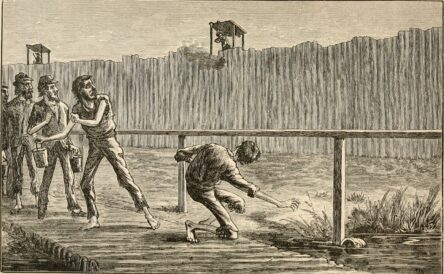
The word didn’t come from corporate boardrooms or classrooms; it crawled out of the blood-soaked soil of Civil War prison camps. Picture Andersonville Prison, one of the most infamous camps of them all. Guards set up wooden railings about 20 feet inside the prison walls and called it the “dead line.” Step across it, even just a hand or a foot, and you’d be shot on the spot. No warnings. No second chances. Just a brutal boundary where survival ended. Aren’t you glad the City Manager will not shoot you on the spot if you miss a deadline to submit your Council agenda staff reports today?
The numbers tell the story of just how brutal these places became. At Andersonville alone, 13,000 of the 45,000 Union prisoners died during the camp’s single year of operation. One witness described the scene with chilling precision: “Twenty feet inside and parallel to the fence is a light railing, forming the ‘dead line,’ beyond which the projection of a foot or finger is sure to bring the deadly bullet of the sentinel”.
Think about that for a moment. A foot. A finger. That’s all it took.
How does a term born from such calculated cruelty end up scheduling your meetings and setting your project due dates? The journey of this word from Civil War death sentence to modern time management reveals something profound about how language evolves – and how quickly we forget the shadows that words carry with them.
The Shocking Origin of ‘Deadline’ in Civil War Prisons
The architects of these death boundaries didn’t follow a standard blueprint. Each prison camp constructed its own version of hell, but the purpose never wavered – cross the line, die.
At Andersonville, guards built a light railing roughly 19 feet inside the stockade walls. Rock Island prison took a different approach, using white stakes illuminated by lanterns to mark their forbidden territory. Think of these markers as the foundation stones of a system designed to kill without question.
Andersonville’s deadline earned its reputation through sheer brutality and scale. The camp started as a structure meant to hold 10,000 prisoners. By August 1864, over 33,000 men were crammed into the same space. Imagine trying to build a house for one family, then forcing three families to live there instead. The result? Catastrophe.
Prisoners didn’t have barracks or proper shelter. They built makeshift lean-tos from scraps or simply dug holes in the ground like animals seeking refuge. This wasn’t prisoner management – it was systematic dehumanization.
The shooting started immediately. Caleb Coplan, a soldier from Ohio, became the first documented victim when he reached under the deadline to grab a piece of flannel. Guards positioned themselves roughly 90 feet apart along the walls, ensuring clear shots at anyone who dared approach their deadly boundary.
Let’s face it: these weren’t just Confederate innovations. Union camps like Camp Douglas and Rock Island operated their own deadly boundaries. The North had blood on its hands too. Yet Elmira prison, despite being a stockade facility, managed to function without a deadline. This proves that alternatives existed – camps simply chose the path of maximum brutality.
Prison administrators didn’t install deadlines out of sadism alone. They served as crowd control mechanisms when resources for proper containment ran thin. Death became the cheapest solution to overcrowding. Simple. Efficient. Horrifying.
The Word’s Journey Through Time
Words don’t just change – they shed their skin entirely. The term “deadline” began its transformation the moment the last Civil War prison gate clanged shut.
Around the 1920s, newspaper editors discovered they needed this powerful word for an entirely different battlefield. Print journalism operated on ruthless timing – miss your submission deadline, and entire production schedules collapsed like dominoes. Editors borrowed the prison term deliberately, understanding that the urgency it carried could move mountains of copy.
Let’s face it: newspapers needed that edge. When a reporter heard “deadline,” the word carried weight that “due date” or “submission time” simply couldn’t match. The connection to those fatal prison boundaries wasn’t accidental – it was strategic.
The transformation accelerated through the mid-20th century. Business discovered what journalism already knew – this word got results. Project managers, corporate executives, and team leaders adopted “deadline” as their go-to term for time-sensitive work. The grim prison origins faded into historical footnotes while the psychological punch remained intact.
Then came the digital revolution. Remote work exploded across time zones, and deadlines became the invisible threads holding global collaboration together. You might be finishing a project in New York while your colleague starts their day in Tokyo, but that deadline creates the shared reality that keeps everything moving forward.
Here’s what hasn’t changed: the urgency remains as real as those prison guard towers. Miss a modern deadline, and you won’t face a bullet – but the stress, the consequences, and the pressure feel surprisingly similar to those life-or-death moments that gave the word its name.
This linguistic evolution shows just how powerfully words can reinvent themselves while keeping their essential nature intact. From a line that meant instant death to a time marker that drives our daily lives, “deadline” proves that language carries its history forward – even when we’ve forgotten where the journey began.
How ‘Deadline’ Shapes Our Lives Today
No bullets fly when you miss a deadline today, but the damage still cuts deep. According to a recent CareerCast survey, deadlines rank as the #1 cause of workplace stress, with 30% of respondents citing them as their primary stressor. Think about that – a term born from literal death sentences has become the leading source of professional anxiety.
The psychological toll shows up in measurable ways. Students facing approaching deadlines shift into what researchers call performance-avoidance motivation – essentially studying out of fear of failure rather than genuine interest. Sound familiar? That knot in your stomach as project due dates loom isn’t just stress – it’s your brain responding to perceived threats the same way it would to physical danger.
The effects don’t stop there. Deadline pressure triggers anxiety, disrupts sleep patterns, and fragments concentration. Your body doesn’t distinguish between a Civil War guard’s rifle and your boss’s expectations – both register as threats to your survival.
But here’s where things get complicated. We need deadlines even as they torment us. When the National Science Foundation dropped regular submission deadlines for geoscience grants, applications plummeted by 59%. Without that artificial boundary, people simply… don’t act. The same pressure that causes us stress also drives us forward.
This contradiction reveals something fundamental about human nature. We crave structure while resenting constraints. We need boundaries while fighting against them. The workplace has only intensified this tension since COVID-19, turning deadline-driven performance into a badge of honor that’s contributing to phenomena like the Great Resignation.
The irony cuts sharp: a term that once marked the difference between life and death in Confederate prisons now creates its own form of confinement. Today’s deadlines don’t threaten your physical existence, but they shape your mental landscape in ways those Civil War guards could never have imagined. You’re still living within boundaries – they’re just invisible now.
Are you truly free when your calendar controls your anxiety levels? The question matters more than you might think.
The Weight Words Carry
Let’s face it: most people rush through their days never questioning where their everyday language comes from. The word “deadline” carries baggage most of us never think about – a history that transforms a simple scheduling term into something far more complex.
This journey from Civil War prison camps to modern conference rooms reveals something crucial about how language evolves. Words don’t just change meaning – they carry shadows of their past, even when we’ve forgotten where they came from. Every time you feel that familiar knot in your stomach as a project deadline approaches, you’re experiencing an echo of something much darker.
Your relationship with deadlines makes perfect sense once you understand their origins. They create structure and drive productivity, yet they also rank as the top workplace stressor. This isn’t coincidence – it’s linguistic DNA. The urgency that once meant life or death still pulses beneath the surface of every due date.
Think about the irony here. A term born from the most brutal form of crowd control now controls the rhythm of your work life. No guards patrol your office with rifles, but those invisible boundaries still shape how you move through your day. The confinement has simply shifted from physical to psychological.
Remember that language doesn’t exist in a vacuum – it reflects our history, even the parts we’d rather forget. When deadline pressure mounts and stress builds, perhaps knowing this history offers perspective. Your anxiety is real, but it’s not life-threatening. The prisoners at Andersonville didn’t have that luxury.
Words transform across generations, but they never completely shed their original skin. The deadline’s dark truth stands as proof that our everyday expressions carry more weight than we realize. Understanding this history doesn’t eliminate deadline stress, but it does remind us that language – like life itself – is far more complex than it appears on the surface.
The next time you hear someone casually mention a “killer deadline,” you’ll know just how accurate that phrase really is.
John Herrera, CPA, President and CEO of MuniTemps, obviously takes deadlines very seriously, when your City sends us a job order for a temporary employee, we will do all we can to meet your request. But we’re glad you will not shoot us if we happen to miss the deadline!
Contact our team at jobs@munitemps.com or visit www.munitemps.com. Remember, MuniTemps specializes in “all things municipal”, from staffing and recruiting to creating meaningful career opportunities for professionals who are passionate about serving their communities.
For more insights, check out the MuniTemps CitySpeak YouTube channel, where you’ll find many video blogs from years past that emphasize the value of conservative, long-term financial planning in local government. Given the current economic uncertainty, you may want to watch the video “What Recession Feels Like at City Hall.”, which offers practical lessons for navigating economic downturns in the public sector.
Thank you for joining us today and here’s to building stronger cities through thoughtful, evidence-based policymaking!