

At City of La Mesa, California, the City Council and the community are serious about mitigating and solving the issue of climate change. The following message is from the City of La Mesa website: “In March 2018, the City of La Mesa affirmed its commitment to environmental sustainability when City Council adopted the Climate Action Plan (CAP). The CAP establishes a long-range roadmap to reduce greenhouse gas (GHG) emissions in the categories of energy, transportation, solid waste, water, and green infrastructure. These efforts support La Mesa’s vision of a community with a safe and healthy environment. The CAP committed the City to amend the plan every five years to reflect inventory and projection updates, measure revisions or additions, and identified pathways towards achievement of future targets. The Climate Action Plan Update was presented to City Council and adopted on November 26, 2024″. There’s much local communities can do to be a part of the broader CAP initiatives.
Here’s the reality we can’t ignore: cities and towns generate close to 75% of the world’s energy-related emissions, with transportation and buildings leading the way. Climate change may be a global challenge, but the most effective solutions often start right where you live and work. If you’re part of local government, your actions have the power to shape how your community weathers this crisis. And make no mistake because climate impacts aren’t waiting for the future. They’re already here, affecting neighborhoods, businesses, and families today.
So why does this matter to you? Because a local climate action plan isn’t just another policy. It’s a tool for real change. Done right, it strengthens your economy, protects public health, and safeguards the environment all at once. Think about it: when wildfires, heatwaves, or flooding strike, it’s your city that bears the brunt. And when you dig into the data, the pattern is clear, the buildings and transportation are usually responsible for 70% to 90% of emissions. That knowledge gives you a head start and shows exactly where to focus for the greatest impact.
But here’s the good news: you don’t need to reinvent the wheel. Resources like the ‘Guidance for Local Government Climate Adaptation’ hand you over 25 ready-to-implement actions across five key sectors. These aren’t theoretical concepts – they’re practical solutions that help your community tackle climate planning challenges head-on and smash through barriers to achieve meaningful emission reductions.
For decades, MuniTemps has partnered with cities, providing expert staffing and consulting support to strengthen municipal operations and help local governments meet both everyday needs and long-term challenges. Our skilled municipal professionals provide the essential administrative backbone that helps cities and their employees succeed, not just in day-to-day operations, but also in tackling big-picture challenges like climate change. This article is especially relevant for city governments and local government employees who are working to establish a long-term plan for building effective climate change action strategies.
Are you ready to build a climate action plan that actually moves the needle? Your municipality holds more power than you might realize to create lasting change that starts at home and ripples outward.
Build Your Climate Foundation Right
You can’t manage what you don’t measure. Your local climate change action plan needs solid ground to stand on, and that foundation starts with a comprehensive greenhouse gas (GHG) inventory. This isn’t just bureaucratic box-checking – it’s your financial blueprint that identifies where emissions leak from your community and establishes the baseline for tracking real progress. Environmental Protection Agency (EPA) guidance confirms that GHG inventories let you create emissions baselines, track trends, assess which sources contribute most, and develop targeted strategies that actually work.
The tools already exist to get this done. EPA’s Local Greenhouse Gas Inventory Tool hands you a free, interactive spreadsheet that crunches numbers across residential, commercial, transportation, and waste management sectors. ICLEI USA’s ClearPath platform takes it further with an online system built specifically for local governments. No excuses – the infrastructure is waiting for you.
Once you’ve mapped your emissions territory, setting ambitious reduction targets becomes your next critical move. Effective targets aren’t wishful thinking – they follow specific rules:
- Declare them publicly for transparency and accountability
- Set clear timeframes with base and target years (typically 5-10 years apart)
- Push beyond business-as-usual assumptions
- Focus on absolute reductions, not intensity games
- Cover your entire geographic scope
- Include all emission scopes where possible
Science-based targets separate serious climate planning from feel-good gestures. These targets align with limiting global warming to 1.5°C above pre-industrial levels – the difference between manageable change and catastrophic disruption. More than 3,200 companies had adopted science-based targets as of May 2023. For municipal climate change action plans, the Science Based Targets initiative recommends 4.2% annual emissions reductions for scope 1 and 2 emissions.
This foundation doesn’t just provide stability – it creates your launch pad for meaningful climate action.
Engaging the Community and Setting Priorities
Climate action plans without community buy-in are just expensive paperwork. Authentic public participation recognizes that everyone brings valuable insights to the table and gives citizens real power in shaping climate policies. The numbers speak volumes: 345 local governments representing over 9.4 million people have already adopted the Climate Smart Communities pledge.
But here’s what often gets missed: marginalized communities face the worst climate impacts yet get shut out of planning processes. Building equitable engagement means tackling three critical justice dimensions – recognitional, distributional, and procedural. Recent data reveals a promising trend: plans published after 2017 showed significantly better results engaging marginalized groups and involving them in actual implementation.
Your engagement strategy should hit three key areas:
- Outreach – delivering hard facts about local climate impacts and motivating emission reductions
- Consultation – collecting real feedback through surveys and polls on proposed policies
- Deliberation – creating space where community members work together to develop recommendations
Don’t skip the fundamentals here. You need a climate change task force that brings together both residents and municipal representatives. The data backs this up: plans covering larger populations were more likely to address procedural justice and include monitoring metrics.
When you prioritize inclusive participation from day one, you’re not just checking boxes – you’re building a local climate change action plan that actually reflects what your community values. That foundation creates the broad support you’ll need when it’s time to turn plans into action.
Implementing, Tracking, and Updating the Plan
The best climate plan in the world means nothing without the money to make it happen. Your climate action plan isn’t just a document – it’s a blueprint for real change that demands real funding. The EPA’s Climate Pollution Reduction Grants program puts nearly $5 billion on the table for states, local governments, tribes, and territories developing greenhouse gas reduction plans. The numbers tell the story – as of November 2024, EPA had already awarded over $4.3 billion to 25 state, local, and Tribal recipients.
But money alone won’t get you across the finish line. Tracking progress becomes your accountability anchor. Think of public transparency as the guardrails that keep your plan on track – ongoing oversight through a steering committee, regular GHG inventory updates, and clear communication with residents about what’s actually working. You’ll need data-driven implementation tools that give you consistent metrics across every initiative. Without these measuring sticks, you’re flying blind.
Your municipal climate change action plan needs regular tune-ups to stay relevant. Plan on major revisions every five years, with annual progress reports that maintain momentum between updates. Many communities turn to tools like Climate Watch to promote transparency through credible emissions data, creating the analysis and comparison capabilities that sharpen your efforts over time.
Here’s where smart planning pays dividends: local climate planning succeeds when woven into other municipal initiatives rather than standing alone. Salt Lake City shows how this works – their “Climate Forward SLC” strategy guides inter-departmental efforts over the next five years and beyond. The most effective local climate change action plans establish a single point of contact with real authority over sufficient budget and staff to carry out adaptation projects.
Your climate plan isn’t a one-and-done project – it’s a living system that grows stronger with consistent attention and smart integration across your entire municipal operation.
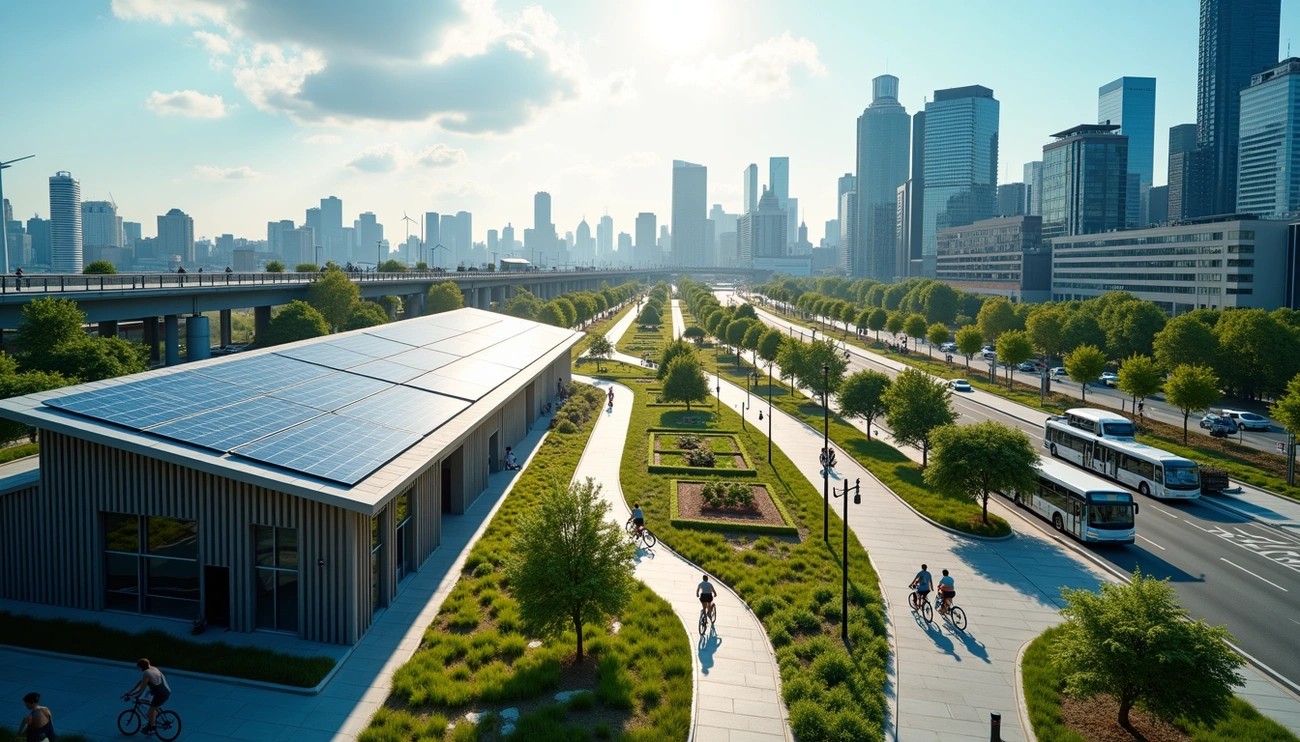
The Path to Real Climate Action
Climate action happens at every government level, but local initiatives drive the changes that actually matter. Your municipality’s climate action plan isn’t just another environmental document – it’s your community’s blueprint for economic growth, healthier residents, and lasting environmental progress.
The foundation starts with knowing exactly where you stand through that greenhouse gas inventory, then setting targets that mean business – the kind aligned with real science, not wishful thinking. Your success hinges on bringing everyone to the table, especially the communities who face climate impacts first and hardest but often get left out of the planning process.
The most powerful climate plans marry technical know-how with community wisdom. Once you tap into funding streams like the EPA’s Climate Pollution Reduction Grants – nearly $5 billion available for communities ready to act – your plans transform from paperwork into projects that change lives. Regular check-ins and honest reporting keep you accountable, while smart updates ensure your strategy stays relevant as conditions shift.
Don’t treat your climate action plan like a dusty binder on a shelf. The five-year revision cycle, backed by annual progress reports, keeps momentum building toward your goals. Salt Lake City’s “Climate Forward SLC” shows how climate work becomes most effective when it weaves through every department and initiative – creating system-wide change instead of isolated projects.
Local climate planning works because you see the impacts up close and can craft solutions that fit your community’s unique needs. Think about it – your leadership decisions today will determine whether your community thrives or struggles with tomorrow’s climate challenges.
Local government holds the keys to climate action that actually moves the needle. The opportunity sits right in front of you, and your community is counting on you to seize it. After all, you’re not just planning for emissions reductions – you’re building your community’s resilient future.
Building on the points shared here, John Herrera, CPA, President and CEO of MuniTemps, encourages all government employees to set bold, actionable climate goals. Doing so ensures that your community is not only reducing emissions but also preparing for a resilient and sustainable future.
Contact our team at jobs@munitemps.com or visit www.munitemps.com. At MuniTemps, we specialize in all things municipal, from staffing and recruiting to creating rewarding career opportunities for professionals dedicated to public service.
For more insights, visit the MuniTemps CitySpeak YouTube channel, where you’ll find timeless video blogs, including those from five years ago, that highlight common-sense approaches to long-term municipal planning. You might also find the video “What Recession Feels Like at City Hall.” especially valuable, as it offers practical lessons for navigating economic downturns in local government.
Thank you for reading and for everything you do to build a stronger, more resilient community.