
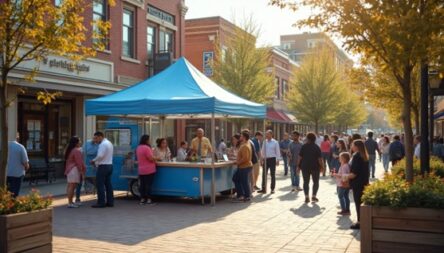
These days, community outreach isn’t just a nice-to-have for small cities—it’s a must. The truth is, 77% of organizations say internships and local programs actually help solve talent shortages. So if your city isn’t tapping into these opportunities, you’re missing out—big time.
John Herrera, President and CEO of MuniTemps, brings over 35 years of experience as a municipal finance officer and consultant, helping local governments and their employees succeed in areas like community outreach and engagement. His insight into public service makes this article especially relevant for small cities looking to build long-term, sustainable strategies for connecting with their residents in meaningful ways.
Location determines participation more than most city leaders realize. Residents show up when opportunities happen close to home, yet too many never hear about chances to get involved. Even more telling? People are 70% more likely to consider a city’s community commitment when making employment decisions. Your outreach strategy directly impacts whether talented people choose your community or drive right past it.
So how do small cities build real engagement without big-city budgets? The answer lies in combining what’s always worked with smart digital solutions. Municipal leaders are discovering a powerful truth: residents respond when calls to action come from groups they already trust. Simple follow-up communications can boost awareness of community initiatives by 7.5% – proof that persistence pays off.
Your small city holds advantages that larger municipalities can only dream about. Throughout this article, you’ll discover practical strategies that have helped small cities create remarkable results. These aren’t theoretical concepts – they’re proven approaches that work when you understand your community’s unique strengths and apply them strategically.
Small Cities Turn Size Into Their Secret Weapon
Small cities don’t just compete with larger municipalities – they’re rewriting the rules entirely. Your smaller population isn’t a limitation; it’s your foundation for building something bigger cities can’t replicate: genuine community connection.
The pandemic forced a reckoning that revealed something remarkable about small-town resilience. When social distancing threatened to tear communities apart, local leaders discovered their creative strength. Brighton, Colorado transformed their traditional Valentine’s Day celebration into “Valensigns Day,” placing personalized messages of love and kindness throughout a public park. The same city created individually marked squares for families to safely enjoy outdoor concerts while maintaining distance. These weren’t just COVID adaptations – they were proof that small cities think differently.
Here’s what sociologists call “familiarity-based trust” – the powerful bond that develops when neighbors know each other personally. This closeness creates a special attachment to place that becomes inseparable from the people who sustain it. Think about it: in communities where residents interact regularly, the connections that form are nearly impossible to replicate in sprawling metropolitan areas.
Your local government’s accessibility becomes a strategic advantage. Consider Sunny Isles Beach, Florida, where the free Residents’ Academy provides adult participants with tools to become knowledgeable community members and effective neighborhood leaders. Young Harris, Georgia – a city of just over 1,000 people – implemented a Main Street program that brought citizens together with council members for consensus-building and future planning. Try pulling that off in a city of 500,000.
Let’s face it: technology adoption is reshaping community engagement in ways that surprise even the experts. More than 30% of smart city projects occur in communities with fewer than 150,000 residents. Small towns excel here because they can gather resident feedback quickly and communicate changes without bureaucratic delays.
The Town of Dumfries, Virginia exemplifies this entrepreneurial spirit, hosting its inaugural Business Expo to unite local entrepreneurs with experts and community leaders. These initiatives prove that small cities are creating engagement strategies that capitalize on their greatest asset – the community connection that money can’t buy.
Your size isn’t your limitation. It’s your launching pad for engagement strategies that larger cities spend millions trying to recreate.
Strategies That Actually Work for Small Cities
Smart small cities aren’t just copying what big municipalities do – they’re creating their own playbook. These communities understand a fundamental truth: effective outreach means meeting residents exactly where they are, both physically and culturally.
Cultural celebrations build community connections that last far beyond the event itself. The City of Terrell, Texas made a brilliant move when they relocated their annual Terrell Taco Festival from City Hall to Historic Downtown. The result? Increased foot traffic, stronger support for small businesses, and genuine celebration of their community’s growing cultural diversity.
Local business partnerships create win-win relationships that strengthen your entire community. Coffee shops team up with bookstores for “book and brew” nights. Restaurants partner with local theaters for dinner-and-show packages. These collaborations don’t just support local enterprises – they give residents reasons to stay local and build connections.
Neighborhood meetups work because they’re simple. Potlucks, park clean-ups, game nights – these casual gatherings create natural opportunities for meaningful interactions around shared interests. Residents who attend these events develop stronger attachments to their communities. No fancy marketing required.
Educational initiatives turn residents into community champions. Take Sunny Isles Beach, Florida’s free Residents’ Academy – it provides adult participants with practical tools to become knowledgeable community members and effective neighborhood leaders. The program includes instruction by commissioners, presentations by department heads, and hands-on activities that actually matter.
Technology amplifies what small cities already do well. Community websites become platforms where local businesses list themselves, clubs announce events, and residents engage in real discussions. Social media works as a powerful tool for promoting local events and gathering community feedback through polls and surveys.
Here’s something many cities overlook: multilingual outreach isn’t just nice – it’s necessary. Forward-thinking municipalities prioritize translation services for outreach materials and digital platforms. Consider this: approximately 2.5 million Bay Area residents speak a language other than English at home. You can’t engage people you can’t communicate with.
The most successful small cities grasp this essential truth: community outreach isn’t about broadcasting messages – it’s about building relationships. The strategies that work create genuine opportunities for dialogue, collaboration, and shared ownership of community initiatives. Your residents don’t want to be talked at – they want to be part of something meaningful.
Small Cities Master What Big Cities Can’t: Real Engagement Measurement
Your small city possesses something larger municipalities would pay millions for – the ability to actually measure and improve community engagement in real time. Most big cities drown in data they can’t act on. You can turn every piece of feedback into immediate action.
Effective measurement starts with the right mix: qualitative data capturing concerns and priorities, plus quantitative data tracking demographics and locations. Smart small cities gather spatial data that pinpoints residents’ favorite places, daily routes, and problem areas. This approach aligns planning decisions with actual public needs instead of educated guesses.
The cities that excel at engagement create complete feedback loops – turning one-time input into ongoing conversations. Your process should follow these steps:
- Co-design surveys with residents to ensure relevant questions
- Collect feedback through multiple channels
- Analyze data to identify patterns and priorities
- Hold community conversations about findings
- Implement changes based on feedback
- Follow up with residents about outcomes
Small cities initially struggle with participation rates, but those using structured feedback processes see attendance jump approximately 70% between first and second community conversations. People show up when they see their input making real differences.
Visual tools make complex data digestible. Heat maps highlight concentrated responses, while sentiment analysis sorts feedback into positive, neutral, or negative categories. These visual representations help you communicate patterns to stakeholders without overwhelming them with spreadsheets.
Keep residents updated on progress through social media, flyers, and information stations. This transparency builds trust and increases future participation. Remember – proximity drives engagement. Residents participate more when issues directly impact their neighborhood. Target your communications to specific areas and translate projects into tangible impacts people can see from their front doors.
The best small cities continuously evaluate their outreach methods, creating improvement cycles that strengthen community bonds. Your size isn’t a limitation – it’s your measurement advantage.
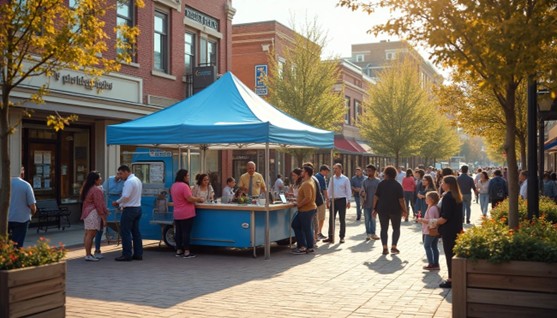
Your Community’s Path Forward
Small cities don’t just compete with larger municipalities – they win. Size isn’t your limitation; it’s your secret weapon for building the kind of authentic community connections that big cities struggle to create.
Think of community engagement as building a house. You need a solid foundation – those face-to-face relationships that small towns naturally foster. Traditional outreach methods provide your framework, while smart technology adds the modern conveniences residents expect. But here’s the truth: without that foundation of genuine connection, even the best digital tools become just expensive decorations.
Your small city holds a unique position. Where else can residents actually know their city council members by name? Where else do neighbors bump into each other at the grocery store and discuss community issues over coffee? This familiarity creates what sociologists call “familiarity-based trust” – the bedrock of civic engagement that metropolitan areas spend millions trying to recreate.
The most successful small cities understand that measurement isn’t about collecting data for reports – it’s about proving to residents that their voices create real change. When attendance jumps 70% between community meetings, you’re not just seeing better numbers. You’re witnessing democracy in action.
Your greatest advantage lies in proximity. Residents engage when issues hit close to home, literally. That park renovation affects their daily walk. That new business impacts their commute. That community program touches their family directly. Large cities talk about “hyperlocal” engagement as some innovative concept. You live it every day.
Here’s what sets apart the cities that thrive: they create complete feedback loops that transform one-time input into ongoing dialogue. They don’t just ask for opinions – they show how those opinions shaped decisions. They don’t just announce changes – they explain how community input guided those changes.
Community outreach isn’t about managing residents or checking boxes for grant applications. It’s about building the kind of place where people choose to put down roots, raise families, and create lasting legacies. Your small city has everything needed to win at this game.
The path forward requires patience, consistency, and genuine commitment to your residents’ voices. But the reward – a thriving community where people truly want to live, work, and belong – makes every effort worthwhile. After all, you’re not just running a municipality. You’re stewarding the place people call home.
Building on the strategies outlined in this article, John Herrera, CPA, encourages all government employees to create intentional, long-term community outreach plans tailored to their city’s unique needs. These efforts lead to stronger civic engagement, improved public trust, and better overall outcomes for local governments.
For more practical insights, check out the MuniTemps CitySpeak YouTube channel. In particular, the video blogs from five years ago highlight John’s common-sense approach to conservative, long-term planning—wisdom that still applies today. Whether you’re just starting out in local government or you’re a seasoned professional, these tools can support your efforts to make a real impact.
You may also want to watch the video titled “What Recession Feels Like at City Hall.”, which offers valuable advice for navigating tough economic times in the public sector.
Thanks for spending time with us today—we hope you walk away inspired to take your city’s outreach efforts to the next level.
Contact our team at jobs@munitemps.com or visit our website www.munitemps.com. Remember that MuniTemps is an expert in “all things municipal”, including staffing, recruiting, and creating career opportunities for job seekers with an affinity for public service in local government.