

Here’s something you might not expect: 7 out of 10 millennials say a city’s commitment to the community plays a big role in where they choose to work. So, your community engagement efforts aren’t just about looking good—they’re actually one of your best tools for attracting top talent.
Most government leaders overlook a powerful resource sitting right in their staffing strategy. Temporary workers represent nearly 2% of the U.S. workforce, yet they remain an underutilized asset that can transform how you connect with your community.
John Herrera, president and CEO of MuniTemps with 35 years of experience as a municipal finance officer and consultant, has watched government organizations discover this hidden advantage firsthand. The numbers tell a compelling story: 77% of organizations report that internships and similar programs effectively address talent shortages. But the benefits extend far beyond filling positions.
When temporary workers power your community engagement efforts, remarkable things happen. Your organization’s reputation strengthens – 90% of agencies using temporary staff report increased efficiency. You gain access to talent pools that might otherwise remain untapped. And perhaps most importantly for budget-conscious government leaders, you significantly reduce hiring costs while expanding your community reach.
The question isn’t whether temporary staff can enhance your community engagement. The question is: are you ready to unlock this hidden power in your own organization?
Why Temporary Staff Matter in Community Engagement
The old way of staffing community engagement isn’t working anymore. With 59% of businesses experiencing increased competition to find the right skills, government organizations can’t afford to ignore temporary workers as an essential resource for community initiatives.
John Herrera has watched this shift unfold during his decades in municipal finance. Temporary professionals don’t just fill gaps – they bring specialized community engagement skills that permanent employees often lack. Think of them as skilled craftsmen who arrive with their own toolbox, ready to tackle projects that might stump your regular team.
Your typical temporary worker carries something your permanent staff might not: fresh perspectives from multiple workplaces. They’ve seen what works and what fails across different organizations. This diversity of thought becomes particularly valuable when you’re trying to connect with various segments of your community. After all, reaching diverse populations requires diverse approaches.
The financial logic is equally compelling. Temporary workers eliminate the costly cycle of recruitment, onboarding, and training that drains budgets. You pay only for the labor you need, when you need it. No more carrying excess payroll during off-peak periods. Those savings? They can flow directly into expanding your community programs.
But here’s where temporary staffing gets really interesting: it gives you access to specialized expertise that doesn’t exist on your current team. Need someone who understands social media engagement? Data analysis? Bilingual community outreach? Temporary staff can bring these technical skills without the long-term commitment. Your permanent employees can then focus on strategic community initiatives instead of getting bogged down in tasks outside their wheelhouse.
Temporary workers serve as natural bridges between organizations and communities. They create pathways for underrepresented groups, often because they themselves come from diverse backgrounds. The flexible nature of temporary staffing means you can adapt your community engagement approach as community needs shift, ensuring your efforts remain relevant and meaningful.
Most importantly, temporary staff help you scale up during peak engagement periods and scale down when things quiet down – without the painful process of layoffs or the expensive burden of maintaining a bloated permanent workforce.
Build Inclusive Programs That Actually Work
Diversity in your temporary workforce isn’t just good optics – it delivers measurable results. Research proves that diverse teams demonstrate greater creativity, innovation, and productivity than homogeneous ones. Diverse temporary staff strengthen community connections through their varied perspectives and real-world experiences.
Let’s face it: cookie-cutter approaches don’t work when you’re trying to reach diverse communities. Your inclusive engagement programs need these foundational elements:
- Representation matters: A workforce that mirrors your community’s diversity enhances service quality, making residents feel comfortable and valued. This becomes crucial during face-to-face community interactions where trust develops.
- Accessibility considerations: Both staffing agencies and client organizations share responsibility for ensuring ADA compliance. Reasonable accommodations enable temporary workers with disabilities to perform essential job functions effectively – and it’s simply the right thing to do.
- Structured onboarding: An effective onboarding process ensures temporary employees integrate quickly, understand their responsibilities, and contribute productively from day one. This preparation prevents costly delays and establishes the right foundation for their work.
Think of inclusive design as building a bridge rather than constructing walls. True inclusion considers the full spectrum of human diversity – abilities, language, culture, gender, and age. This approach means designing with people who have different lived experiences, not just for them.
Here’s a hard truth: trust remains the most fundamental factor in government-community relationships. Community members who don’t trust your organization won’t engage with your efforts, period. Temporary staff often serve as valuable “networks of trust” that deliver and amplify communication between your organization and the communities you serve.
Success demands preparation. Targeted training focused on core responsibilities helps reduce the learning curve for temporary workers. Pair this with mentorship programs – assign experienced team members as guides who can answer questions and provide support as new staff adapt to your community engagement approach.
Your temporary workforce becomes an extension of your organization’s values. Build these programs right, and they become powerful tools for meaningful community connection.
Support Systems and Success Stories from Local Governments
Smart local governments don’t just hire temporary staff – they build the scaffolding that helps these workers succeed. Think of support systems as the foundation that transforms good intentions into measurable community impact.
John Herrera has watched this transformation happen across dozens of municipalities throughout his career as a municipal finance officer and consultant. The difference between success and failure often comes down to three essential support pillars:
Comprehensive training programs that equip workers with knowledge about community rights, services, and resources
Mentorship opportunities pairing temporary staff with experienced team members
Collaborative networks bringing together multiple agencies and organizations to coordinate service delivery
Texas Health and Human Services proves this approach works. Their Foster Grandparent Volunteer Program recruits adults 55+ to provide one-on-one emotional support and mentoring to children with exceptional needs. The Community Partner Program takes a different angle – engaging organizations to help people manage their benefits, including food, cash, and medical assistance. Both programs rely heavily on temporary workers who receive structured support from day one.
The results speak for themselves when governments embrace flexibility. WorkForce Central’s Community Engagement team shows how temporary staff can create and nurture relationships with system partners, ensuring communities access needed resources, training, and employment. Their Pierce County Community Engagement Task Force brings together nearly 150 members from multiple sectors throughout the county.
Want to see targeted impact? The NYC Civic Engagement Commission’s Voter Language Assistance Program provides interpretation services for limited English proficient voters at select poll sites. This initiative hires temporary workers specifically to support community engagement and outreach, including liaising with community organizations and civic groups.
These aren’t just feel-good stories – they’re blueprints for action. Each example demonstrates how temporary staff become crucial bridges between government institutions and the communities they serve. The secret isn’t in hiring temporary workers. The secret lies in building robust support systems that transform these workers into powerful community assets.
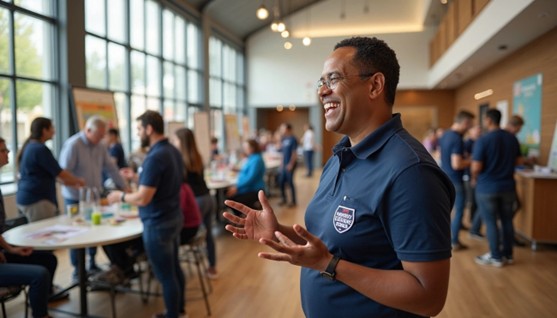
The Future of Community Engagement Through Temporary Staffing
The path forward is clear. Temporary staff don’t just fill gaps in your organization – they build bridges to your community that permanent staff alone cannot construct.
Organizations that embrace temporary workers as strategic community assets consistently outperform those that treat them as mere stopgaps. The evidence speaks for itself through the success stories we’ve explored – from Texas Health and Human Services to NYC’s Civic Engagement Commission.
Think about what this means for your organization. Your temporary staff bring diverse perspectives that reflect your community’s reality. They provide specialized skills exactly when you need them. Most importantly, they create authentic connections with residents who might otherwise remain disconnected from government services.
The financial advantages compound over time. Cost savings from strategic temporary staffing free up resources for expanding community programs. Your permanent employees focus on long-term strategic initiatives while specialized community engagement receives expert attention from temporary professionals.
Don’t underestimate the ripple effects. When community members feel truly heard and served through effective engagement, trust in government increases. That trust becomes your organization’s most valuable asset – one that temporary staff help you build through every interaction.
Government service offers unique opportunities to make lasting impact on communities. Strategic temporary staffing multiplies that impact while strengthening your organization’s capacity to serve. The question isn’t whether you can afford to integrate temporary staff into your community engagement framework. The question is whether you can afford not to.
Your community deserves government services that are responsive, inclusive, and effective. Temporary staff provide the flexibility and expertise to deliver exactly that. The hidden power of temporary staff lies not just in what they do today, but in the sustainable relationships they help you build for tomorrow.
Ready to unlock this potential in your organization? The framework exists. The success stories prove it works. Your community is waiting. Contact our team at jobs@munitemps.com or visit our website www.munitemps.com.
Remember that MuniTemps is an expert in “all things municipal”, including staffing, recruiting, and creating career opportunities for job seekers with an affinity for public service in local government.
Together with the excellent points made throughout this article, John Herrera, CPA, encourages all government employees to set intentional goals for using temporary staffing as part of their long-term community engagement strategy. This gives public agencies a practical and powerful way to increase community trust, reduce operating costs, and build more resilient service delivery systems.
Be sure to go to the MuniTemps CitySpeak YouTube channel and check out the video blogs from five years ago, which highlight the common-sense approach of conservative, long-term financial planning. See if there are any concepts or tools you can apply during your career as a municipal or other government employee.
You may also want to watch the YouTube blog on “What Recession Feels Like at City Hall.” to gain insights on how financial planning intersects with effective public service during challenging economic times.
We appreciate your time and interest.