
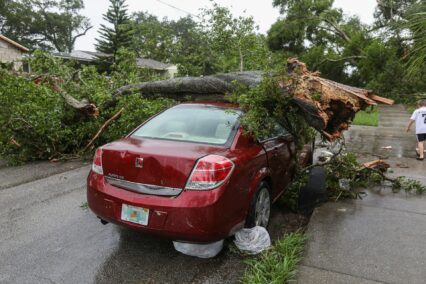
Before we jump into discussing government’s role in managing natural disasters, I want to put in a plug for the “finance” side of these unfortunate events. As a CPA with 35 years in local government finance, I want to remind you to set up a Project number immediately, by asking your Accountant to use your accounting system, regardless of what system you are using, so you begin charging staff time (via Payroll), services & supplies (via Accounts Payable), and record an Accounts Receivable ledger on your Balance Sheet (via General Ledger) throughout the period of the natural disaster. Managing disasters through cost accounting tracking (CAT) will allow your organization to quickly provide updates and report their fiscal impact to your governing body, and to state and federal grant agencies for reimbursement.
My name is John Herrera, President and CEO of MuniTemps, I have helped many local governments on the “fiscal side” of managing disasters. With that said, your organization’s goal should always be to strengthen your ability to respond to natural disasters with strategic, long-term planning. Drawing from an understanding of cost accounting for municipal operations, using any CAT system available in your accounting software, I have worked to ensure that City clients are not only financially sound but prepared for the unexpected. This article is especially relevant for local government professionals seeking to develop strong emergency response systems and resilient communities in the face of growing climate threats, and always remembering to set up a Project number to track all cost accounting in the event of a natural disaster.
Here’s something that might surprise you, every $1 spent on disaster preparedness can save $6 in recovery costs. Still, most communities wait until crisis hits to discover just how unprepared they really are. With climate change supercharging extreme weather across America, the consequences are piling up, floods alone have caused nearly $75 billion in damage over the last 30 years. The question isn’t if your community will face disaster. It’s when, and whether you’ll be ready.
Local governments face a stark reality without robust crisis management plans. Confusion spreads faster than floodwater. Services collapse when citizens need them most. Legal liability mounts while public confidence crumbles. Recent disasters expose alarming vulnerabilities in our systems – more than 30% of flood damage since 2005 occurred in areas outside mandatory flood insurance zones. Hurricane Harvey made this problem impossible to ignore when approximately 80% of flooded homes sat outside designated flood zones.
These aren’t just statistics – they’re wake-up calls. When other communities face extreme weather events, their experiences provide crucial insights for improving future disaster management. You can’t afford to ignore these lessons.
Your community’s survival depends on understanding how government responds when nature unleashes its full force. Real crisis stories have transformed emergency management practices, and local governments are building more resilient communities today using hard-won wisdom from past disasters. The frequency and severity of extreme weather events make this knowledge essential, not optional, for effective disaster response.
Let’s examine what works – and what doesn’t – when everything is on the line.
The Four Phases of Government Disaster Management
Government disaster management doesn’t happen by accident. Like constructing a building, it follows a continuous cycle of four distinct yet interconnected phases that maximize safety while minimizing impacts. Understanding these phases reveals exactly how government responds when your community faces its darkest hour.
Mitigation forms the foundation – the most cost-efficient method for reducing hazard impacts. Government agencies identify risks through vulnerability assessments and implement long-term strategies like updating building codes, enforcing flood-proofing requirements, and adopting zoning ordinances that direct development away from hazard-prone areas. The numbers don’t lie: up-to-date building codes save $11 for every $1 invested. This isn’t just smart planning – it’s financial protection for your community.
Preparedness activities occur before disasters strike and include planning, organizing, training, and exercising. Agencies develop action plans to manage risks and build necessary capabilities for implementation. Take the Texas Division of Emergency Management – they operate as an all-hazards response agency for hurricanes, tornados, fires, and other disasters. Their Academy trains emergency management professionals with “boots on the ground” knowledge, making them immediately effective during crises. This foundation doesn’t just provide stability – it creates the launch pad for effective response.
Response mobilizes when disaster strikes. Government entities implement the National Incident Management System (NIMS), which guides all levels of government to work together. The National Response Framework structures how support flows among private sector, non-government organizations, and federal partners. Response activities include search and rescue, medical care, firefighting, and establishing shelters. Without this coordination, even the best plans crumble under pressure.
Recovery aims to restore affected areas while implementing improvements that reduce future disaster risk. Let’s face it, simply rebuilding to pre-disaster standards recreates the same vulnerabilities that caused problems in the first place. Governments now embrace “Building Back Better” approaches. This creates more resilient communities through improved infrastructure, revitalized economies, and strengthened social systems.
Federal, state, and local governments coordinate extensively throughout these phases to ensure communities receive appropriate assistance when disaster strikes. Your community’s survival depends on how well these four phases work together.
Real Crisis Stories That Changed Government Response
Catastrophic disasters don’t just destroy buildings – they shatter illusions about government preparedness. Each major crisis exposes gaps that force fundamental changes in how emergency management works.
Hurricane Katrina’s devastating impact in 2005 changed everything. Over 1,800 people died, and families scattered to all 50 states. The government’s response crumbled when it mattered most. Communication systems failed. Evacuation plans proved worthless. Coordination between agencies collapsed completely. The public outcry was swift and fierce.
Congress responded with the Post-Katrina Emergency Management Reform Act (PKEMRA) in 2006, which redefined FEMA’s mission entirely and designated its Administrator as the principal advisor to the president for all emergency management matters. This wasn’t just policy tweaking – it was a complete overhaul of how America prepares for disasters.
Hurricane Sandy in 2012 brought its own harsh lessons. The storm caused approximately $19 billion in damages across New York City alone and exposed dangerous vulnerabilities in coastal infrastructure. But this crisis sparked innovation. The Sandy Recovery Office (SRO) and the Sandy Regional Infrastructure Resilience Coordination Group emerged from the wreckage. These entities coordinated nearly 400 projects totaling over $27 billion, proving that collaborative planning and resilience-focused approaches could work.
The 2021 Texas Winter Storm Uri delivered another wake-up call. When 4.5 million homes lost power and at least 246 people died, the state couldn’t ignore its vulnerabilities any longer. Senate Bills 2 and 3 overhauled ERCOT’s governance structure and established new weatherization requirements for power plants. Yet natural gas facilities received less stringent regulations, showing that comprehensive disaster preparedness still faces political and economic obstacles.
Don’t overlook the 2020 Iowa Derecho. Though less publicized, this storm caused approximately $7.5 billion in damages and left 585,000 residents without power. The disaster revealed critical communication breakdowns between emergency managers and vulnerable populations, especially immigrant communities. These failures prompted reforms in information-sharing protocols that other states now study.
Each disaster teaches the same lesson: crisis reveals weaknesses, then drives essential transformation. Your community’s emergency management system exists because previous communities paid a terrible price for being unprepared. The question is whether you’ll learn from their experience or repeat their mistakes.
How Local Governments Are Building Resilience Today
Smart communities don’t wait for disaster to strike, they build their defenses now. Local governments across America are constructing stronger foundations against increasingly frequent natural disasters, and the results speak for themselves.
The Community Emergency Response Team (CERT) program has become the backbone of community preparedness. These volunteers master essential skills including fire safety, light search and rescue, team organization, and disaster medical operations. The numbers tell the story: CERT operates in all 50 states with more than 3,200 local programs nationwide and over 600,000 trained participants. Think of CERT as your community’s insurance policy – when professional responders are overwhelmed, these trained neighbors step up.
Public-private partnerships create another layer of protection. These collaborations strengthen prevention, preparedness, and response through cross-sector education, technical assistance, and interdependency exercises. Walgreens employees receive advanced training to support emergency operations centers during disasters. The Strategic National Stockpile program in Georgia brings together state public health agencies and local businesses to protect public health during large-scale emergencies. These aren’t just feel-good partnerships – they’re survival networks.
Financial protection mechanisms provide the economic fortress walls around your community. The National Flood Insurance Program, managed by FEMA and delivered through more than 47 insurance companies, provides coverage to property owners in 22,600 participating communities. These policies offer nearly $1.30 trillion in flood protection nationwide. Without this financial foundation, one disaster can bankrupt entire communities.
Technology transforms how governments respond when seconds count. Cloud-based disaster recovery solutions enable governments to reduce recovery time while keeping critical applications running during crises. One state agency hit by ransomware restored all mission-critical applications in less than two weeks using cloud infrastructure – operating at just 40% of on-premises costs. Geographic Information Systems (GIS) help identify high-risk zones, assess vulnerabilities, and develop effective disaster management plans by integrating data on population density, infrastructure, and historical event patterns.
Your local government isn’t just reacting to disasters anymore, it’s actively building the resilience that keeps communities standing when nature strikes. These approaches work because they prepare before crisis hits, not after.
The Path Forward
Natural disasters will continue testing our communities, that’s the hard reality we face. Climate change amplifies their frequency and intensity, but you’re not powerless against these forces. Effective preparation saves lives and slashes costs dramatically. The four-phase approach provides your community’s blueprint for survival, not just reaction.
Past catastrophes taught us painful but essential lessons. Hurricane Katrina rebuilt FEMA from the ground up. Hurricane Sandy sparked regional cooperation that saved billions. Texas Winter Storm Uri and the Iowa Derecho exposed weaknesses that demanded immediate fixes. Crisis reveals gaps – then drives the transformation that saves lives next time.
Your community stands better prepared today because of these hard-won lessons. Community Emergency Response Teams put trained volunteers in every neighborhood. Public-private partnerships create support networks that activate when government resources stretch thin. Financial protection mechanisms shield families from bankruptcy when nature strikes. Technology solutions restore critical services faster than ever before.
The stakes couldn’t be higher. Weather-related disasters affect millions annually, causing billions in damages. Yet communities that build comprehensive disaster management before crises strike protect their citizens, infrastructure, and economies most effectively.
Think of disaster preparedness as your community’s insurance policy, except this insurance actually prevents losses instead of just covering them afterward. Every dollar spent on preparedness returns six dollars in avoided damage. That’s not just smart math – it’s smart leadership.
Your community’s resilience depends on action taken today, not promises made tomorrow. Each preparedness investment strengthens the foundation that keeps your neighbors safe when everything else falls apart. After all, the most important lesson from every disaster we’ve examined shows that preparation, coordination, and resilience-focused recovery save both lives and resources when nature unleashes its full force.
The path to community resilience isn’t always straight, but it’s entirely achievable with proper planning and sustained commitment. Your community’s survival story starts with the choices you make right now.
Alongside the important takeaways from this article, John Herrera, CPA, encourages all government employees to establish a long-term plan for building resilient communities and effective disaster response systems. This kind of proactive planning helps safeguard public trust, reduce financial losses, and ensure continuity of essential services when emergencies hit.
Contact our team at jobs@munitemps.com or visit www.munitemps.com to explore how we support local governments through expert staffing, recruitment, and career-building opportunities tailored for those passionate about public service. Remember that MuniTemps is an expert in “all things municipal”.
For more practical insights, be sure to visit the MuniTemps CitySpeak YouTube channel, where John shared video blogs five years ago that still resonate today—especially those focused on conservative, common-sense financial planning in the public sector. One standout video to check out: “What Recession Feels Like at City Hall.”, which offers timely advice for navigating financial uncertainty in local government.
Thank you for joining us today. Let’s keep building stronger, safer communities—together.